
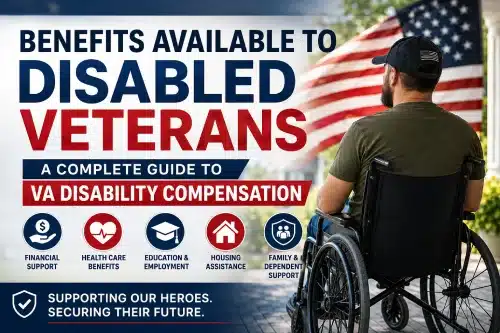
Benefits Available to Disabled Veterans
Disabled veterans across the USA have access to a wide range of benefits designed to support their health, finances, and long-term stability. Among these, VA disability compensation is one of the most important programs. It provides monthly, tax-free payments to veterans who were injured or developed illnesses during military service. Beyond financial support, the Department of Veterans Affairs (VA) offers healthcare, education, housing, and family assistance programs that can make a real difference in daily life.
If you’re unsure what benefits you qualify for, this guide breaks down the most valuable options available and answers common questions veterans often have.
VA Disability Compensation and Related Financial Benefits
VA disability compensation is a monthly, tax-free payment for veterans with service-connected conditions. Your compensation amount depends on your disability rating (from 0% to 100%) and whether you have dependents. Many veterans in the USA rely on this benefit as a steady source of income while managing their health.
Several related programs can increase your financial support:
- Special Monthly Compensation (SMC): Paid to veterans with severe disabilities, such as loss of limb use or the need for daily assistance.
- Total Disability Based on Individual Unemployability (TDIU): Pays at the 100% rate if service-connected disabilities prevent you from maintaining substantially gainful employment.
- Additional Compensation for Dependents: Veterans rated 30% or higher may receive extra monthly payments for spouses, children, or dependent parents.
- Concurrent Retired and Disability Pay (CRDP): Some retirees qualify to receive both retirement pay and disability compensation without offset.
These benefits often work together, helping veterans achieve better financial security while focusing on recovery and quality of life.
Healthcare and Daily Living Benefits for Disabled Veterans
The VA operates one of the largest healthcare systems in the USA, offering specialized services for veterans with service-connected conditions. Eligible veterans can access:
- VA Healthcare Benefits: Includes primary care, specialty care, mental health support, and rehabilitation services.
- Copayment Exemptions: Many veterans do not pay copays for treatment related to service-connected conditions.
- Vision and Hearing Services: Routine exams are available, and in qualifying cases, eyeglasses or hearing aids may be provided.
- CHAMPVA: Covers healthcare costs for eligible spouses and dependents of certain disabled veterans.
For veterans needing help with daily tasks, Aid and Attendance (A&A) provides additional monthly payments for personal care support, making independent living more manageable.
Eligibility for VA Disability Benefits
Education, Employment, and Housing Support Programs
Disabled veterans often seek ways to build a stable future beyond their service. The VA offers programs to support education, employment, and housing needs across the USA:
- Vocational Readiness and Employment (VR&E): Helps veterans train for new careers, find jobs, or start businesses.
- Education Benefits for Dependents: Dependents of severely disabled or deceased veterans may qualify for education assistance programs.
- VA Housing Grants: Programs like Specially Adapted Housing (SAH) help veterans modify homes for accessibility.
- Mortgage Life Insurance: Provides coverage for certain veterans with severe disabilities and VA-backed loans.
These programs are designed to promote independence while supporting long-term personal and financial goals.
Additional Benefits Many Veterans Overlook
Some VA benefits are less widely known but still highly valuable:
- VA Pension: For wartime veterans with limited income and non-service-connected disabilities.
- VA Clothing Allowance: Annual payment for veterans whose medical devices damage clothing.
- Automobile Allowance & Adaptive Equipment: Helps with purchasing or modifying vehicles for mobility needs.
- VA Dental Care Options: Certain veterans qualify for comprehensive dental coverage or discounted insurance.
- Life Insurance for Disabled Veterans: Offers protection for families and financial peace of mind.
- Survivors’ Benefits: Dependents may receive compensation and education assistance after a veteran’s death.
- Military Funeral Honors & Burial Benefits: Eligible veterans can receive ceremonial honors and burial in national cemeteries.
- Free Tax Preparation: Many organizations offer no-cost assistance tailored for veterans.
Why VA Disability Compensation Matters
Understanding available benefits can help disabled veterans across the USA secure the care and financial stability they deserve. From healthcare and housing to education and family support, these programs are built to honor your service and support your future. Most importantly, VA disability compensation remains the foundation of financial assistance, ensuring veterans have a reliable monthly income while accessing additional resources.
Call Today for a Free Consultation
Email: Ge******@*****mm.us or Call: (760) 309-7100.
FAQs: VA Disability Compensation
Who qualifies for VA disability compensation?
Veterans with injuries or illnesses connected to their military service may qualify, provided they meet VA eligibility requirements and file a claim.
Is VA disability compensation taxable?
No. VA disability compensation is tax-free at both federal and state levels in the USA.
Can I work while receiving VA disability compensation?
Yes. However, veterans receiving TDIU must meet employment limitations based on income thresholds.
How long does it take to get approved?
Processing times vary, but many claims in the USA take several months depending on complexity and evidence provided.
Can I receive multiple VA benefits at once?
Yes. Many veterans receive disability compensation alongside healthcare, education, or housing benefits.
How can I apply for VA benefits?
You can apply online through VA.gov, by mail, or with assistance from accredited representatives and veterans service organizations.