
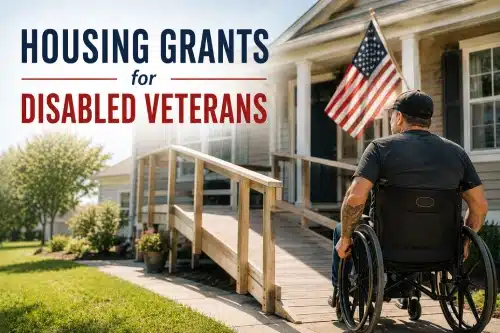
Housing Grants for Disabled Veterans: Financial Help to Build or Modify Your Home
For many veterans with disabilities due to their military service, an accessible and safe home is vital to their independence and quality of life. As a result, several grants are available specifically to assist disabled Veterans with the cost of building or buying a house or modifying their current residence to accommodate their accessibility.
The construction or modification of an existing residence can include a wide range of items that are available through these programs, such as adding a wheelchair ramp, widening doorways, and creating a currently-accessible living environment.
This guide will outline the various types of housing grant programs, program eligibility, and how Veterans can apply for and receive financial support for providing accessibility in their home.
What Is Housing Grants for Disabled Veterans?
Housing Grants for Disabled Veterans are different than traditional loans since they are a form of financial assistance to help Veterans adjust their existing residence or build a new residence to meet their physical needs as a result of disability that harms their ability to live independently.
Examples of items that may be covered through these different Programs can include the following:
- Accessible entrance ways that allow a wheelchair-user to get into the residence
- Wider hallways and entrance doorways for increased mobility
- Roll-in shower for increased personal care needs
- Bathroom/ kitchen counters that are made to meet the user’s specific height
- Handrails in the lavatory area or kitchen/pantry area shall meet the user’s height.
- Smart home technology to assist the disabled veterans in performing daily tasks
The goal is simple: to help veterans live safely and independently in homes that meet their physical needs.
Types of Housing Grants for Disabled Veterans
There are many different types of programs offered through the federal government that specifically focus on helping veterans with disabilities. By understanding the types of programs available, you can determine the best option for your unique needs.
- Specially Adapted Housing Grants (SAH)
The SAH grant provides financial assistance to veterans who have severe service-connected disabilities in order to build, purchase, or modify a permanent residence. The awards can be used for many types of housing modification, including adding ramps, widening doorways, and updating other fixtures & fittings.
Some examples of service-connected disabilities that qualify for SAH Grants include:
- Loss of use of both legs
- Severe burns
- Certain respiratory conditions
- Blindness with other related disabilities
SAH Grants provide some of the highest monetary assistance available through the various federal government veteran housing assistance programs. Some examples of what will be funded with the SAH Grant include:
- Building a new accessible home
- Modifying an existing home
- Reducing the amount owed on the mortgage on a modified home.
- Special Home Adaptation (SHA) Grant
A Special Home Adaptation (SHA) grant is designed for veterans who have disabilities and require a home modification but do not meet the qualifying requirements for the Special Adapted Housing (SAH) grant. The SHA grant can help fund a variety of home improvements, such as:
- Wheelchair access
- Accessible bathrooms
- Accessible kitchens
- Safety features within your home
Veterans using this grant can modify either an existing home they currently live in or their family member’s home.
- Temporary Residence Adaptation (TRA) Grant
Many veterans live with their family members as they recover from or adapt to a disability. The Temporary Residence Adaptation (TRA) grant helps fund modifications to temporarily used family residences by veterans. Examples of these modifications can include:
- Installing ramps
- Widening doorways
- Constructing accessible bathrooms
Creating a space that is safe and comfortable for veterans as they transition to permanent housing.
Eligibility Requirements for Housing Grants
Evidence Required for a Strong VA Disability Benefits Claim
To qualify, veterans must have a service-related handicap verified by the VA. Otherwise, his/her eligibility is determined based on the following common eligibility criteria:
1) Honorable or qualifying military discharge
2) Service-related disability rating
3) Medical verification of any mobility difficulties
4) Homeownership or immediate intention to purchase a home.
Some grants may have additional specific conditions for eligibility depending on the veteran’s disability severity and type.
Generally, veterans must also be enrolled in a VA disability compensation program before completing a housing grant application.
Guide to Getting a Housing Grant for Disabled Veterans
It can be daunting to complete the Housing Grant Application Process. The steps outlined below can help you pursue a Housing Grant easily and help get you on the road to having a safe, accessible home to live comfortably in.
Step 1: Check Your Eligibility
The VA has various programs available to help disabled veterans obtain housing. The most important factor in determining your eligibility for these programs is to find out your disability rating and any service-connected condition you have.
Step 2: Collect Necessary Documentation
When starting this process, it is important to gather necessary documents such as:
- VA disability rating approval notice
- VA medical records
- Proof that you own your home or a signed Purchase Agreement from the seller of a home
- Proof of your identity
If you have all of your documents in order before you begin the application process, this makes the process go more quickly, and you will have a better chance at receiving assistance.
Step 3: Submit Application
Once you have collected all documentation, the next step is to complete an application for assistance through the VA’s Housing Assistance Program(s). You can apply for assistance online or by working with someone at a local VA office.
Step 4: Work with a Housing Specialist
After your application has been reviewed by the VA, a housing specialist will reach out to you and assist you in determining if you qualify for funding and, if you do, what the necessary modifications to your home need to be.
They will also send a certified home inspector or architect to your home to assess whether the proposed modifications are feasible and if they would provide benefits.
Step 5: Complete Home Modifications
Once your funding application has been approved and you have received the funding you need, you can begin renovations and/or construction to provide an accessible home for yourself.
Common Mistakes Veterans Make When Applying
Veterans who apply for federal financial assistance may not always receive timely payments for many reasons. Some reasons veterans will experience delays or denials of assistance are simply due to error. The four most common errors made by applicants include:
- Ineligible Applicants. Some applicants incorrectly choose an ineligible grant program to submit their application based on the type of disability they possess.
- Missing Documentation. Missing or inaccurate documentation (such as medical records) that are required by the grant program can impede the approval process for the grant application.
- Delayed Application. Some veterans decide to wait too long to submit their application (even though they qualify) for the housing assistance provided through one of the Federal grants.
- Unprofessional Assistance. By working with a VA housing counselor, professional, or accredited representative, you may improve your chances of approval of your application.
A Real-World Example: How Housing Grants Impact Lives
For example, an injured veteran who needs a wheelchair will have obstacles at their home (like entering and using the bathroom) without proper housing.
Thanks to housing grants for injured veterans, this particular veteran will be able to make modifications to their home, such as:
- Adding a ramp to the front porch;
- Adding an accessible kitchen with a lower counter height;
- Having a roll-in shower installed;
- Making front door openings wider.
These modifications will allow the veteran to regain their independence as well as make it a more comfortable place to live.
Disabled Veterans Support Resources Beyond Housing Grants
Veterans can access a wide range of support services, such as:
- Home improvement grants;
- Exemption from property taxes;
- Grant assistance for adaptive equipment;
- VA loans;
- Housing programs run by state governments for veterans.
Utilizing these supplemental services can significantly reduce a veteran’s overall costs associated with ownership and/or upkeep of an accessible home.
Assistance with your VA claim
Housing that is accessible helps individuals who have disabilities to not just live independently but also maintain their sense of dignity. Thankfully, there are some programs that provide grants to veterans so that they may be able to build new accessible homes or modify existing homes to make them accessible.
Veterans should familiarize themselves with the different types of programs available, review eligibility requirements, and understand the application process before applying for a program, because all of these steps are part of the process of securing a safe and comfortable home.
How to apply for a disability housing grant
If you think you may qualify for a housing grant due to a disability, you should contact a VA housing representative or an accredited veteran’s organization to help you apply for a program that provides this assistance. By working with an accredited representative, you will increase your chances of receiving benefits you earned as a result of your service to our great country.
Frequently Asked Questions
- What are housing grants for disabled veterans?
Housing grants for disabled veterans are financial assistance programs that help veterans build, buy, or modify homes to accommodate service-connected disabilities. These grants do not need to be repaid.
- Who qualifies for housing grants for disabled veterans?
Veterans with service-connected disabilities that affect mobility, vision, or respiratory function may qualify. Eligibility depends on disability ratings and medical documentation.
- How much financial assistance can veterans receive?
The amount varies by program. Some grants provide tens of thousands of dollars to help cover construction or modification costs.
- Can housing grants be used to modify an existing home?
Yes. Many programs allow veterans to modify their current homes or homes owned by family members where they live.
- Are housing grants for disabled veterans taxable?
In most cases, these grants are not considered taxable income because they are assistance benefits rather than earnings.
- Can veterans use multiple housing grants?
In some cases, veterans may use grants multiple times throughout their lifetime as long as the total funding limit has not been exceeded.