

VA Back Pay Explained: Maximizing the Benefits You’re Owed
What if a $10,000 deposit appeared in your bank account overnight? For many veterans, this scenario isn’t hypothetical — it’s the reality of receiving VA disability back pay, a tax-free lump sum awarded to compensate for the time between your claim’s effective date and its approval.
Whether you're initiating a new claim or awaiting a decision, understanding how back pay works can make a significant financial difference. At VETCOMM US, we specialize in helping veterans navigate the claims process and secure the benefits they've earned — including every dollar of back pay they’re entitled to.
Let’s break down what back pay is, how it's calculated, who's eligible and how to make sure you receive every dollar you're owed.
What Is VA Disability Back Pay?
VA back pay — also called retroactive benefits — is a one-time, tax-free lump sum payment. It compensates you for the time between your claim's effective date and the date the VA approves your disability benefits. Because claims can take months to process, back pay ensures you're financially covered for the time you should have been receiving compensation.
Your effective date is crucial — it’s the date the VA uses to determine how far back you’ll be paid. Submitting an intent to file locks in this date while you continue gathering evidence for your full claim. If you file your claim within one year of leaving active duty, your effective date is typically set as the day after your discharge.
However, if you file later, the effective date is usually the date the VA received your claim or the date your entitlement arose — whichever is later. In certain situations, such as appeals with new evidence or requests for an increased rating, you may be eligible for an earlier effective date. This often depends on when your condition worsened or when new supporting evidence was submitted.
Several factors influence how much back pay you may receive. One of the most significant is your disability rating — the higher your rating, the greater your monthly compensation. Your dependency status also affects the amount. Veterans who have a spouse, children or dependent parents may qualify for additional monthly payments.
Another key factor is your effective date, which determines how far back your compensation goes. Additionally, VA compensation rates change annually due to cost-of-living adjustments. This means that each year within your back pay period may have a different payment rate and the VA will calculate your back pay month by month based on the rates in effect during each time period.
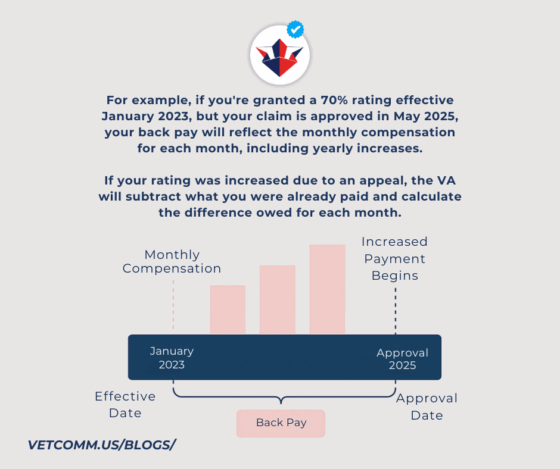
For example, if you're granted a 70% rating effective January 2023, but your claim is approved in May 2025, your back pay will reflect the monthly compensation for each month, including yearly increases. If your rating was increased due to an appeal, the VA will subtract what you were already paid and calculate the difference owed for each month.
Once approved, most veterans receive their lump sum back pay via direct deposit within 15 to 45 days. It may take longer up to 60 days — if your case is more complex.
Delays can happen if:
- Your banking info is outdated
- You owe money to the VA or another federal agency
- The VA is still verifying dependents or other claim details
In some cases, your back pay may hit your bank account before your award letter arrives.
At VETCOMM US, we understand that navigating the claims process can be complex and overwhelming. That’s why we’re here to help. Our team is here to make sure you're locking in your effective date, filing correctly and getting the benefits you’re owed. Book a free claim review call with our team at vetcomm.us
Subscribe to the VETCOMM US YouTube channel for more breakdowns, tips and veteran benefit updates.