
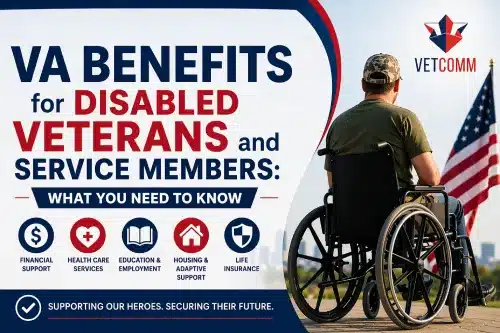
VA Benefits for Disabled Veterans and Service Members: What You Need to Know
If you’re wondering whether you qualify for VA Benefits for Disabled Veterans, you’re not alone. Many service members and veterans aren’t fully aware of the support available to them—both during active duty and after separation. The Department of Veterans Affairs (VA) offers a wide range of benefits designed to support disabled veterans and service members dealing with service-connected conditions.
Understanding what’s available—and when to apply—can make a major difference in your financial stability, healthcare access, and long-term quality of life.
Disability Compensation and Financial Support
One of the most important VA Benefits for Disabled Veterans is tax-free disability compensation. This monthly payment is provided to veterans who have a service-connected disability. The amount you receive depends on your disability rating, which ranges from 0% to 100%.
Veterans with higher ratings or dependents (such as a spouse or children) may receive additional compensation.
Key highlights include:
- Tax-free monthly payments
- Additional compensation for dependents
- Eligibility for special monthly compensation in certain cases
- Access to other related VA programs
If you’re still on active duty and dealing with a service-related injury or illness, you may be eligible to start the claims process before discharge through programs like the Benefits Delivery at Discharge (BDD).
VA Health Care and Medical Services
Medical care is one of the most valuable VA benefits available. The VA operates more than 1,300 medical centers and outpatient clinics nationwide. These facilities provide treatment for service-connected conditions and general health care needs.
Disabled service members may also coordinate care between the VA and TRICARE. Your service branch provider can refer you to VA facilities for combat-related injuries or ongoing treatment.
Available medical services include:
- Primary and specialty care
- Mental health services
- Post-traumatic stress disorder (PTSD) treatment
- Rehabilitation and prosthetic services
- Long-term care and caregiver support
For veterans coping with PTSD or other mental health conditions, the VA offers counseling, group therapy, and research-based treatment programs designed specifically for military experiences.
Education, Employment, and Transition Programs
VA benefits go beyond compensation and healthcare. Many disabled veterans qualify for education and career support programs that make transitioning into civilian life easier.
The GI Bill® programs—such as the Montgomery GI Bill® and the Post-9/11 GI Bill®—can cover tuition, housing, and training costs. In some cases, benefits can be transferred to a spouse or child.
Disabled veterans may also qualify for Veteran Readiness and Employment (VR&E), formerly known as vocational rehabilitation. This program helps veterans with service-connected disabilities prepare for, find, and maintain employment. It can include career counseling, resume development, job training, and even assistance starting a small business.
Service members leaving the military due to medical reasons often receive additional guidance through the Transition Assistance Program (TAP).
Housing, Vehicle, and Life Insurance Benefits
For veterans with permanent or severe service-connected disabilities, the VA provides grants to adapt homes or vehicles.
Housing grants may help you:
- Build a specially adapted home
- Modify an existing home for accessibility
- Purchase a home already adapted to your needs
Vehicle grants can assist with purchasing an adapted automobile or installing specialized equipment. In some cases, the VA may help cover repair or replacement costs.
Life insurance is another key benefit. Service-Disabled Veterans Insurance (S-DVI) offers coverage to veterans with qualifying disabilities. Active-duty members are typically covered under Servicemembers’ Group Life Insurance (SGLI) until separation.
Common Questions About VA Benefits for Disabled Veterans
Many veterans hesitate to apply because they’re unsure about eligibility or the process. Here are a few common concerns:
- Do I qualify if I’m still on active duty?
Yes. Some benefits are available during service, especially for those with service-connected injuries. - How do I prove my disability is service-connected?
Medical records, service treatment records, and supporting documentation are critical. - How long does it take to receive benefits?
Processing times vary, but submitting complete and accurate documentation helps reduce delays. - Can I receive multiple VA benefits at once?
In many cases, yes. Disability compensation, healthcare, education benefits, and housing assistance can often be used together.
Take the First Step Toward the VA Benefits You Deserve
Navigating VA Benefits for Disabled Veterans can feel overwhelming, but the support available can significantly improve your quality of life. Whether you need medical care, monthly compensation, education assistance, or home modifications, these benefits were created to support you and your family.
The key is understanding your eligibility and applying at the right time.
Call: (760) 309-7100 Today for a Free Consultation or Email: Ge******@*****mm.us
VA Benefits for Disabled Veterans – FAQs
What are VA Benefits for Disabled Veterans?
VA Benefits for Disabled Veterans include tax-free disability compensation, healthcare services, education assistance, housing grants, employment programs, and life insurance options for veterans with service-connected disabilities.
Who qualifies for VA disability compensation?
Veterans with an illness or injury that was caused or worsened by military service may qualify. A VA disability rating determines payment amounts.
Can active-duty service members receive VA benefits?
Yes. Certain benefits are available during active duty, especially for those with service-connected injuries or illnesses.
Are VA disability payments taxable?
No. VA disability compensation is tax-free at both the federal and state levels.
Can I receive education and disability benefits at the same time?
In many cases, yes. Eligible veterans can receive disability compensation while also using GI Bill® education benefits.