
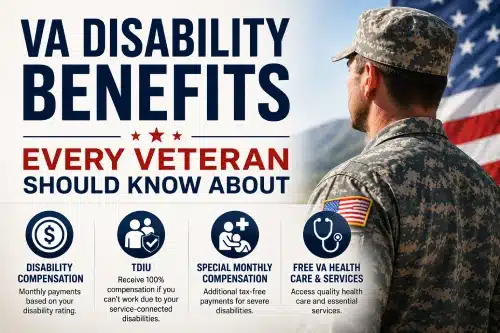
VA Disability Benefits Every Veteran Should Know About
Veterans can greatly improve their financial security, access to healthcare, and overall well-being through knowledge of VA Disability Benefits. While most veterans know about VA Disability Compensation, they may not know that many other VA benefit programs can help them support their families for the long-term. Examples of VA-benefit programs include Total Disability Individual Unemployability (TDIU), Special Monthly Compensation, and Free VA Health Care and Other Services. All of these programs provide valuable support to veterans who are unable to work due to a disability related to their military service; however, thousands of eligible veterans do not file these claims simply because they do not know they exist. This guide outlines key VA disability benefits, explains how they operate, and informs veterans on how to file claims for all benefits available to them.
Understanding VA Disability Benefits
To fully understand the various programs available, it helps to have a basic understanding of the VA disability system.
VA Disability Compensation provides veterans who incurred disabilities or illnesses while in military service with a tax-free monthly payment based on a level of disability between 0% and 100%, as determined by the Department of Veterans Affairs. Compensation amounts are based on monthly disability rating and the corresponding impact a veteran’s specific condition has (a) on their daily life; and/or (b) their ability to work.
In addition to Compensation, veterans may also be eligible for additional programs that provide veterans with additional financial and medical assistance.
- VA Disability Compensation
VA Disability Compensation is the core benefit most veterans receive after filing a disability claim.
Monthly payments vary depending on:
- Disability rating
- Number of dependents
- Severity of the condition
- Additional qualifying circumstances
For example, a veteran with a 30% disability rating will receive a smaller payment than someone rated at 70% or 100%.
What Many Veterans Don’t Know
Even veterans with lower disability ratings may qualify for:
- Increased compensation after worsening conditions
- Secondary condition claims
- Additional benefits tied to dependents
Keeping medical records updated and requesting rating reviews when symptoms worsen can lead to higher compensation.
- TDIU (Total Disability Individual Unemployability)
When Disabilities Prevent You From Working
TDIU (Total Disability Individual Unemployability) is one of the most valuable benefits available to veterans.
This program allows veterans to receive compensation at the 100% disability rate, even if their combined disability rating is lower.
Veterans may qualify if their service-connected conditions prevent them from maintaining substantially gainful employment.
Basic Eligibility Requirements
Generally, veterans must have:
- One disability rated 60% or higher, OR
- Multiple disabilities with a combined rating of 70%, with one condition rated at least 40%
If approved, the veteran receives the same monthly compensation as someone rated 100%.
For veterans struggling to work due to service-connected conditions, this benefit can be life-changing.
- Special Monthly Compensation (SMC)
Extra Support for Severe Disabilities
Special Monthly Compensation provides additional tax-free payments to veterans with particularly serious disabilities.
This benefit is available in cases involving:
- Loss of limbs
- Blindness
- Need for aid and attendance
- Severe mobility limitations
- Certain combinations of disabilities
Unlike standard disability compensation, SMC is paid on top of regular VA disability payments.
Real-World Example
A veteran who requires assistance with daily activities such as bathing, dressing, or eating may qualify for Aid and Attendance, a type of Special Monthly Compensation.
Unfortunately, many veterans qualify for SMC but never apply because they assume their current disability rating already covers everything.
- Free VA Health Care and Other Services
Health Care Benefits Veterans Should Know
Another important program among the VA Disability Benefits Every Veteran Should Know About is Free VA Health Care and Other Services.
Veterans with service-connected disabilities often qualify for comprehensive medical coverage through the VA health care system.
Services may include:
- Primary care visits
- Specialist care
- Mental health treatment
- Surgery and hospitalization
- Prescription medications
- Rehabilitation services
Veterans with higher disability ratings may receive priority access and reduced costs for many services.
Additional Support Programs
Beyond medical care, veterans may also receive:
- Home health assistance
- Prosthetic services
- Caregiver support
- Telehealth appointments
- Long-term care services
These resources are designed to ensure veterans receive the support they need throughout their lives.
- Additional VA Benefits Many Veterans Overlook
Besides the major programs already discussed, several other benefits may be available depending on a veteran’s situation.
Examples include:
- VA pension benefits
- Vocational rehabilitation programs
- Adaptive housing grants
- Education and training assistance
- Caregiver support programs
- Transportation assistance for medical appointments
Many of these programs work together with disability compensation to create a comprehensive support system.
Step-by-Step: How Veterans Can Access These Benefits
If you believe you may qualify for additional VA disability benefits, follow these steps.
Step 1: Review Your Current VA Disability Rating
Start by checking your current rating and medical records. Understanding how your condition is evaluated helps determine whether additional benefits may apply.
Step 2: Gather Medical Evidence
Collect documentation such as:
- Doctor reports
- Treatment records
- Disability evaluations
- Statements describing how the condition affects work and daily life
Strong medical evidence is essential for successful claims.
Step 3: File a Claim or Request a Rating Increase
Veterans can file claims through the VA’s online portal or by submitting official claim forms.
Claims may include:
- New disability claims
- Secondary conditions
- Requests for increased ratings
- TDIU applications
Step 4: Work With Accredited Representatives
Many veterans work with VA-accredited attorneys or Veterans Service Organizations (VSOs) to navigate the claims process.
These professionals understand the system and can help avoid common mistakes.
Common Mistakes Veterans Make When Filing Claims
Even eligible veterans sometimes miss out on benefits due to simple mistakes.
Common issues include:
- Not providing enough medical evidence
- Missing filing deadlines
- Underestimating how conditions affect work
- Failing to apply for secondary conditions
- Not appealing denied claims
Understanding these pitfalls can improve the chances of approval.
You Don’t Have to Navigate This Alone
The VA claims process can feel overwhelming, especially for veterans already dealing with serious health conditions.
The good news is that you don’t have to navigate this alone.
Veterans can receive assistance from:
- Accredited VA claims agents
- Veterans Service Organizations
- VA-accredited attorneys
- Local veteran support groups
These resources can guide veterans through the process and help ensure they receive the full benefits they deserve.
Veterans can take advantage of the help available to them through VA Disability Benefits; therefore, all veterans need to understand this information. VA provides financial assistance and medical coverage to veterans through several different programs to ensure that veterans are treated properly throughout their lives for injuries they received during their active military duty.
Many veterans have left benefits on the table because they do not know what they qualify for. If you think you may qualify and have not yet claimed any benefits, you should look at your existing disability rating, collect your medical records, and discuss with a certified VA representative.
By taking action today, you can potentially receive the support owed to you for your time in service to our country.
FAQs: VA Disability Benefits
What are the most important VA disability benefits every veteran should know about?
The most important benefits include VA Disability Compensation, TDIU (Total Disability Individual Unemployability), Special Monthly Compensation, and Free VA Health Care and Other Services.
Can veterans receive 100% compensation without a 100% disability rating?
Yes. Veterans may qualify for TDIU, which allows them to receive compensation at the 100% rate if their service-connected disabilities prevent them from working.
What is Special Monthly Compensation?
Special Monthly Compensation (SMC) is an additional tax-free payment given to veterans with severe disabilities, such as loss of limbs, blindness, or the need for daily assistance.
Do all disabled veterans qualify for free VA health care?
Many veterans with service-connected disabilities qualify for free or low-cost VA health care, depending on their disability rating and income level.
Can I apply for VA disability benefits years after leaving the military?
Yes. Veterans can file disability claims at any time, even decades after leaving service, as long as they can show the condition is service-connected.
What should I do if my VA disability claim is denied?
Veterans can appeal the decision, submit additional medical evidence, or request a higher-level review. Many denied claims are later approved during the appeals process.