
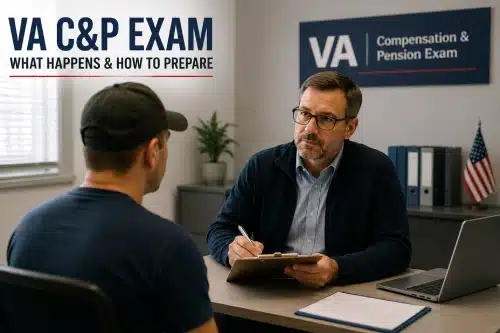
What Happens During a VA C&P Exam and How to Prepare
If you are inquiring as to what takes place during a VA C&P exam and how to get ready for it, you may want to know what questions the examiner will ask, whether medical records should be brought in, and how the assessment will impact your VA disability claim. However, preparation can make things less complicated. The C&P exam is not to provide treatment. The purpose of the exam is to collect evidence regarding your injury/condition, the level of disability, and whether it relates to your military service. When you know what to expect, you will be able to speak openly and honestly.
What Is a VA C&P Exam?
C&P (Compensation and Pension) exam is the medical examination carried out by the Department of Veterans Affairs to assist in deciding on the disability claim filed by a veteran. All veterans may not need to get examined by C&P. The evidence may already be enough for the Department of Veterans Affairs to make a decision. However, when additional medical information is needed, the C&P exam helps evaluate the condition of the veteran and the severity of the disability.
The examiner is likely to be a VA professional or a contracted examiner. The examiner does not make a final ruling regarding the veteran’s disability (VA disability rating). The examiner’s report is only one of the pieces of evidence that the VA goes through before making a decision.
A C&P Exam Is Not Regular Medical Treatment
This is one of the most important things to understand.
During a C&P exam, the examiner generally will not:
- Treat your condition
- Prescribe medication
- Provide ongoing medical care
- Give you a referral for treatment
- Tell you your final VA rating
Instead, the appointment focuses on collecting information relevant to your disability claim.
What Happens During a VA C&P Exam?
The exact process depends on the condition you claimed. A mental health exam may feel very different from an orthopedic exam for a back or knee condition. Still, most exams follow a general pattern.
- The Examiner Reviews Your Claim Information
The examiner may review information related to your claim and ask questions based on the medical evidence and the Disability Benefits Questionnaire (DBQ) associated with your condition.
You may be asked about:
- When your symptoms began
- How your condition has changed over time
- Your current symptoms
- Treatment and medications
- Flare-ups or periods of worsening symptoms
- How the condition affects work and daily activities
The best approach is to answer truthfully and describe your actual experiences.
- You Answer Questions About Your Symptoms
Expect direct questions about how your condition affects you.
For example, a Veteran with a back condition might be asked how often pain occurs, whether it limits movement, and whether flare-ups make normal activities more difficult.
A Veteran with a mental health condition may be asked about symptoms such as sleep problems, anxiety, depression, concentration issues, relationships, or difficulty functioning.
Do not minimize your symptoms simply because you are used to living with them. At the same time, do not exaggerate. Clear, specific examples are usually more helpful than vague statements.
Instead of saying, “My knee hurts sometimes,” you might explain, “After standing for about 20 minutes, my knee pain increases, and I need to sit down.”
- The Examiner May Perform a Physical Examination
Depending on your claimed condition, the examiner may perform a basic physical examination. This may include checking movement, strength, reflexes, or other physical findings.
The examiner may also request additional testing, such as imaging or blood work, when needed. VA states that any tests ordered as part of the claim exam are provided at no cost to the Veteran.
A critical tip: Do not push yourself beyond your normal limitations just to appear strong. If a movement causes pain or your condition limits your ability to perform it, explain that honestly.
How to Prepare for a VA C&P Exam
Knowing how to prepare for a C&P exam can help you feel more confident and organized.
- Review Your Claimed Conditions
Before the appointment, review the conditions you have claimed and consider how each affects your daily life.
Consider:
- What symptoms do you experience?
- How often do they occur?
- What triggers flare-ups?
- How long do symptoms last?
- What activities are difficult?
- How does the condition affect work, sleep, family life, or social activities?
You do not need to memorize a speech. A simple list of important symptoms and examples can help you avoid forgetting key details.
- Submit New Medical Evidence Before the Exam
If you have recent private medical records, test results, or treatment records that are relevant to your claim, submit them to VA before the exam whenever possible. VA explains that Veterans can submit new non-VA medical records through available claim submission channels or through an accredited representative or VSO.
You may bring records with you, but the examiner cannot submit them to VA on your behalf. That is why submitting evidence properly before the appointment is important.
- Arrive Early and Dress Comfortably
VA recommends arriving about 15 minutes early. Arriving late could create problems or even result in the appointment being canceled. Wear comfortable clothing that allows you to move if a physical examination is required.
Also, confirm the appointment details when you receive them. If you cannot attend, contact the VA or the contractor as soon as possible to discuss rescheduling. Missing an exam without an acceptable reason can delay your claim and may affect how VA decides it.
Common VA C&P Exam Mistakes to Avoid
Even a well-prepared Veteran can make mistakes during a stressful appointment. Here are some of the most common:
Minimizing Your Symptoms
Many Veterans are used to saying, “I’m fine,” even when they are struggling. During a C&P exam, be honest about the bad days, not just the good ones.
Exaggerating Your Condition
Overstating symptoms can hurt credibility. The goal is accuracy, not saying what you think will produce a higher rating.
Focusing Only on Your Best Day
Some conditions fluctuate. If you experience flare-ups, explain how often they occur, how long they last, and what happens during them.
Giving Vague Answers
Specific examples are more useful than general statements. Explain what you can no longer do or what tasks take longer because of your condition.
Assuming the Examiner Decides Your Claim
The examiner prepares an evaluation or report. VA reviews that report along with the rest of the evidence before making a decision.
What Happens After a VA C&P Exam?
After the appointment, the provider prepares an exam report and sends it to VA. VA then reviews the report with the rest of the evidence in your claim.
The evidence may include:
- Your medical records
- Military medical and personnel records
- The C&P exam report
- Test results
- Statements from you, family members, or other people
After reviewing the evidence, VA makes a decision and sends you a decision letter.
If you want a copy of the final exam report, you generally need to request it through the appropriate VA records request process. The examiner typically will not give you the results during the appointment.
VA C&P exam: Prepare Carefully, Then Be Honest
Knowing what to expect and how to prepare for a VA C&P exam can help make it less daunting. You’ll want to go over your symptoms, compile any necessary evidence, show up early, and respond to questions sincerely and with detailed examples. Keep in mind that the C&P exam is just one element within the entire VA disability claim process.
And if you have concerns about the upcoming examination, such as the evidence you need to provide or how your medical condition might be evaluated, talking to a VA disability professional may provide insight into your situation. A qualified professional can go over your claim and advise you on possible options.
Need help with your VA disability claim? Contact an experienced VA disability accredited representative at VetComm US to discuss your case and learn how you can move forward.
Frequently Asked Questions About VA C&P Exams
What should I bring to my VA C&P exam?
You generally do not need to bring anything specific. However, submit relevant new private medical records before the exam whenever possible. You may also bring information for your own reference.
How long does a VA C&P exam take?
The length varies. Some exams may take around 15 minutes, while others can last an hour or longer depending on the condition and information needed.
What questions are asked during a C&P exam?
Questions may cover your symptoms, when they began, treatment history, flare-ups, and how the condition affects your work and daily activities. The questions depend on the condition being evaluated.
Can I bring someone to my VA disability exam?
You may discuss having a family member or caregiver accompany you. However, the examiner may ask them to remain outside the examination room, especially when sensitive topics are discussed.
Can a C&P examiner deny my VA disability claim?
No. The examiner does not make the final claim decision. VA reviews the examination report along with the entire evidence record before deciding the claim.
What if I have a bad C&P exam experience?
If you believe the exam was not conducted properly or you had serious concerns about the experience, document what happened and report your concerns through the appropriate VA or contractor channels.
Can I get my C&P exam results immediately?
Usually, no. The examiner generally will not provide your final results or tell you your VA disability rating during the appointment. You can request a copy of the final exam report through VA’s records request process.