
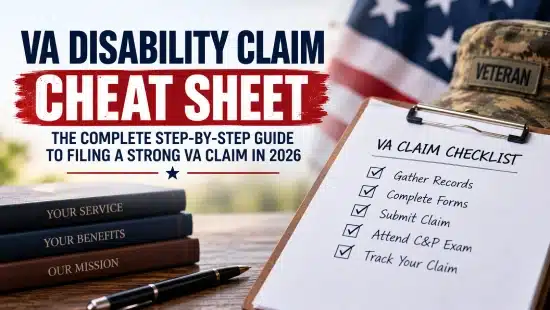
VA Disability Claim Cheat Sheet: Step-by-Step Filing Guide for 2026
Filing a VA disability claim can feel overwhelming, especially when you’re not sure what evidence to submit, which forms to use, or what happens after you hit “submit.” A missing record or incomplete form can create unnecessary delays. That’s why having a simple VA disability claim cheat sheet can make the process easier to manage.
This guide is very simple to understand and highlights sharing information, which can assist you in knowing what to do phase-by-phase before, during, and after filing your application.
What Is a VA Disability Claim Cheat Sheet?
A VA disability claim cheat sheet is a helpful guide that assists veterans in preparing and filing a successful VA disability compensation claim. It provides a step-by-step guide so you do not have to guess what documents are needed and what the next steps of the claim will be.
A good cheat sheet helps you:
- Know how to meet the requirements for VA benefits
- Gather medical evidence
- Keep the necessary documents organized
- Avoid mistakes when filing
- Know what will happen next in your claim
- Be ready for your C&P exam
In other words, it is a guide that will help you during the whole claims process.
VA Disability Claim Cheat Sheet: Step-by-Step Checklist
Step 1: Confirm Your Eligibility
Before filing, make sure you qualify for VA disability compensation.
Generally, you’ll need:
- Veteran status
- A current diagnosed medical condition
- Evidence that your condition began or worsened during military service
- A medical link (nexus) connecting your disability to your service
Even if your symptoms developed years after leaving the military, you may still qualify if your condition is service-connected.
Step 2: Gather Your Medical Evidence
Medical evidence often makes the biggest difference in a VA claim.
Collect documents such as:
- Service treatment records
- VA medical records
- Private physician records
- Diagnostic imaging (X-rays, MRI, CT scans)
- Lab results
- Surgical reports
- Mental health evaluations
- Prescription history
The stronger your evidence, the easier it is for the VA to understand how your condition affects your daily life.
Step 3: Write a Personal Statement
Many veterans overlook this step.
A personal statement explains how your disability impacts your everyday activities, work, family responsibilities, and overall quality of life.
Include details like:
- When symptoms started
- How symptoms have changed
- Daily pain or limitations
- Missed work
- Difficulty sleeping
- Mobility issues
Real-life examples often provide valuable context beyond medical records.
Step 4: Obtain Supporting Statements
Supporting evidence from others can strengthen your claim.
Helpful statements may come from:
- Family members
- Friends
- Fellow service members
- Supervisors
- Caregivers
These “buddy statements” describe changes they have personally witnessed since your military service.
Step 5: Complete the Correct VA Forms
One of the easiest mistakes is submitting the wrong paperwork.
Depending on your situation, you may need forms for:
- Initial disability claim
- Supplemental claim
- Higher-Level Review
- Board Appeal
- Dependency benefits
Double-check every section before submitting.
Step 6: File Your Claim
Veterans can submit claims:
- Online
- By mail
- In person
- With help from an accredited representative
Always keep copies of everything you submit.
Step 7: Prepare for the C&P Exam
Many claims require a Compensation and Pension (C&P) examination.
During the exam:
- Be honest
- Describe your worst days—not just your best days
- Don’t exaggerate symptoms
- Don’t minimize your pain either
The examiner evaluates how your condition affects your ability to function, not just your diagnosis.
VA C&P Exam and How to Prepare
Important Documents to Keep in One Folder
Creating a dedicated claims folder can save time and reduce stress.
Keep copies of:
- DD Form 214
- Service treatment records
- VA decision letters
- Medical records
- Nexus letters
- Buddy statements
- C&P exam notices
- Prescription records
- Imaging reports
- Claim confirmation receipts
Being organized makes responding to VA requests much easier.
Common VA Disability Claim Mistakes to Avoid
Even strong claims can be delayed or denied because of avoidable errors.
Filing Without Enough Medical Evidence
A diagnosis alone doesn’t always prove service connection.
Supporting documentation is essential.
Missing Deadlines
Respond quickly if the VA requests additional evidence.
Missing deadlines can significantly delay your claim.
Leaving Sections Blank
Incomplete applications often require additional review, slowing the process.
Review everything carefully before submission.
Skipping Medical Appointments
Consistent medical treatment creates documentation that supports your claim.
Regular appointments demonstrate the ongoing nature of your condition.
Downplaying Your Symptoms
Many veterans are used to pushing through pain.
During your claim, explain your limitations honestly so the VA understands the full impact of your disability.
Learn more about VA Claim Mistakes to Avoid
Expert Tips to Strengthen Your VA Disability Claim
Experienced VA advocates often recommend these best practices:
Keep a Symptom Journal
Write down:
- Pain levels
- Sleep problems
- Flare-ups
- Medication side effects
- Missed workdays
This record can help refresh your memory during exams and appeals.
Stay Consistent
Your medical records, personal statements, and exam responses should all tell the same story.
Inconsistencies can raise questions during claim review.
Continue Medical Treatment
Don’t stop seeing your healthcare provider after filing.
Updated records may become important if additional evidence is requested.
Respond Promptly
If the VA sends a letter requesting more information, reply as soon as possible.
Quick responses help keep your claim moving forward.
Real-World Example
Imagine a veteran who develops chronic knee pain after years of physically demanding military service.
Instead of submitting only a diagnosis, they include:
- Service medical records
- MRI results
- Physical therapy notes
- A doctor’s nexus opinion
- A spouse’s statement describing mobility limitations
- A personal statement explaining difficulty climbing stairs and working
This complete package gives the VA a much clearer picture than medical records alone.
Need Help With Your VA Disability Claim?
The utilization of a well-indicated VA disability claim cheat sheet will help in making this whole process easier than ever. With the relevant evidence at hand, in addition to being organized, making medical appointments, and avoiding not-so-smart mistakes, the chances of this claim being successful will heighten.
If there are any kinds of questions related to your claim or the need for some help, reach out to a team of professionals at VetComm US.
Frequently Asked Questions
- What is a VA disability claim cheat sheet?
A VA disability claim cheat sheet is a simple checklist that helps veterans prepare, organize, and submit a complete disability claim. It outlines the documents, evidence, and steps needed throughout the process.
- What documents do I need for a VA disability claim?
Most veterans need their DD214, service treatment records, current medical records, supporting statements, and any evidence connecting their disability to military service.
- Can I file a VA disability claim without a nexus letter?
Yes, but a nexus letter can significantly strengthen your claim by explaining how your current condition is related to your military service.
- How long does a VA disability claim usually take?
Processing times vary depending on claim complexity, available evidence, and VA workload. Claims with complete documentation often move more smoothly than incomplete submissions.
- What should I bring to my VA C&P exam?
Bring a photo ID, any requested paperwork, and be prepared to discuss your symptoms honestly. Review your medical history beforehand so your answers remain accurate and consistent.
- What are the most common reasons VA disability claims are denied?
Claims are often denied because of insufficient medical evidence, lack of service connection, incomplete applications, missed deadlines, or inconsistent documentation.