
VA PTSD Disability Rating: How PTSD Ratings Work
Life with post-traumatic stress disorder (PTSD) can impact all aspects of everyday life, from your job and relationships to sleep patterns and general health. There are a lot of veterans who wonder how PTSD is rated by the VA. Veterans often do not understand how the VA rates claims and what should be included to get fair compensation.
The following guide explains how the PTSD rating works, what the VA looks for, what to avoid, and how to support your claim better.
Understanding VA Disability for PTSD Rating
The PTSD rating of the Department of Veterans Affairs indicates the percentage of impairment in functioning due to PTSD.
PTSD evaluation is different than most physical injuries, as it depends on the severity of the symptoms and how the symptoms affect functioning at work and in society.
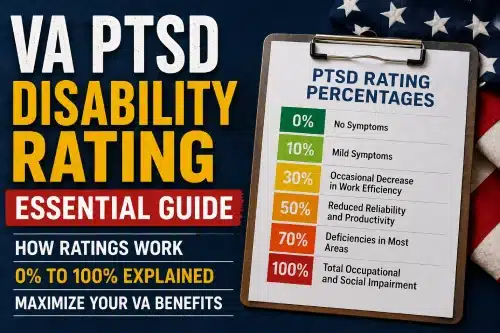
The ratings for disability due to PTSD by the Department of Veterans Affairs include:
- 0%
- 10%
- 30%
- 50%
- 70%
- 100%
The greater the rating, the higher the compensation received.
How the VA Determines a PTSD Disability Rating
The VA reviews several pieces of evidence before assigning a rating.
Medical Records
Mental health treatment records help demonstrate:
- Diagnosis
- Ongoing symptoms
- Treatment history
- Medication use
- Therapy participation
Consistent medical documentation often strengthens a claim.
Compensation & Pension (C&P) Exam
The PTSD C&P exam is one of the most important parts of the process.
During the examination, the provider evaluates:
- Anxiety
- Depression
- Panic attacks
- Memory problems
- Sleep issues
- Anger or irritability
- Social relationships
- Ability to work
The examiner documents how PTSD affects daily functioning rather than simply checking whether symptoms exist.
Lay Statements
Statements from:
- Family members
- Friends
- Coworkers
- Fellow service members
can help explain how PTSD affects your everyday life outside the doctor’s office.
VA Disability for PTSD Rating Percentages
10% Rating
Veterans may receive a 10% rating when symptoms are mild and only occasionally interfere with work or social functioning.
Examples include:
- Mild anxiety
- Temporary stress reactions
- Symptoms controlled by medication
30% Rating
A 30% rating generally reflects occasional decreases in work efficiency.
Common symptoms include:
- Chronic sleep impairment
- Anxiety
- Depressed mood
- Mild memory loss
- Weekly panic attacks
Most veterans at this level can still function independently.
50% Rating
A 50% PTSD rating indicates more significant impairment.
Symptoms may include:
- Difficulty maintaining relationships
- Frequent panic attacks
- Flattened emotional expression
- Trouble understanding complex tasks
- Poor judgment
- Reduced productivity at work
Many veterans experience noticeable challenges both professionally and personally.
70% Rating
A 70% rating reflects severe occupational and social impairment.
Symptoms often include:
- Suicidal thoughts
- Near-continuous depression
- Severe anxiety
- Obsessional rituals
- Difficulty adapting to stressful situations
- Poor impulse control
- Inability to maintain healthy relationships
Many veterans at this level struggle to maintain steady employment.
100% Rating
A 100% rating represents total occupational and social impairment.
Examples include:
- Persistent hallucinations
- Gross impairment in thought processes
- Severe memory loss
- Persistent danger of harming self or others
- Inability to perform daily activities
- Complete inability to work because of PTSD
Not every veteran with severe PTSD receives 100%, but those whose symptoms prevent substantial gainful employment may qualify.
How to Build a Strong VA PTSD Claim
A successful PTSD VA claim depends on credible, consistent evidence.
Step 1: Obtain a Current PTSD Diagnosis
Your diagnosis should come from a qualified mental health professional.
Step 2: Prove the Service Connection
You’ll need evidence showing that your PTSD resulted from military service.
Examples include:
- Combat service
- Military sexual trauma (MST)
- Training accidents
- Serious injuries
- Witnessing traumatic events
Step 3: Gather Supporting Evidence
Helpful documentation includes:
- Medical records
- Service treatment records
- Personnel records
- Buddy statements
- Personal statement
- Therapy notes
The stronger your evidence, the easier it is for the VA to understand your condition.
Step 4: Prepare for the PTSD C&P Exam
Be honest and specific.
Describe:
- Your worst days
- Work limitations
- Sleep problems
- Family challenges
- Panic attacks
- Isolation
Don’t minimize your symptoms simply because you’re used to living with them.
Common Mistakes That Can Hurt Your PTSD Rating
Many veterans unintentionally weaken their claims.
Avoid these common mistakes:
- Missing the C&P examination
- Downplaying symptoms
- Failing to seek treatment
- Providing inconsistent information
- Not submitting supporting statements
- Assuming a diagnosis alone guarantees benefits
Consistency across medical records, personal statements, and examinations matters.
Can You Increase Your VA PTSD Rating?
Yes. If your condition has worsened, you can file for an increased rating.
Helpful evidence includes:
- Updated mental health records
- Hospitalizations
- New therapy records
- Employer statements
- Family observations
- Independent medical opinions
Veterans should continue documenting symptoms even after receiving an initial rating.
Real-World Example
Imagine a veteran who initially received a 30% PTSD rating after separating from service.
Over several years, panic attacks became more frequent, relationships deteriorated, and maintaining full-time employment became difficult. Updated medical records, therapy notes, and statements from family members showed how the condition had progressed.
After filing for an increased evaluation with stronger evidence, the veteran received a higher disability rating that better reflected the severity of daily limitations.
This example highlights why ongoing documentation is important when symptoms change over time.
VA disability rating process for PTSD
A clear understanding of the VA disability rating process for PTSD can impact your ability to lodge or appeal claims successfully. In its assessment, the VA takes into account not just the diagnosis, but also the way PTSD influences your day-to-day functionality, including your ability to work and socialize. If you would like to be able to support your claim with solid medical evidence, clear preparations for your Compensation and Pension exam, and a record of your symptoms, you are poised to submit a stronger claim.
If you are not sure of how to go about your PTSD VA claim and need some guidance, it is always a good idea to enlist the help of a licensed VA disability expert.
Frequently Asked Questions
- What is the highest VA disability for PTSD rating?
The highest schedular VA disability rating for PTSD is 100%, which is assigned when PTSD causes total occupational and social impairment.
- How long does a PTSD VA claim take?
Processing times vary depending on evidence, claim complexity, and VA workload. Complete and well-documented claims often move more efficiently than those requiring additional evidence.
- Can I work while receiving a PTSD VA disability rating?
Yes. Many veterans continue working while receiving disability compensation. However, severe PTSD that prevents substantially gainful employment may affect eligibility for additional benefits such as Total Disability based on Individual Unemployability (TDIU).
- What evidence helps a PTSD VA claim the most?
Strong evidence includes medical records, a PTSD diagnosis, service records, buddy statements, therapy notes, and a detailed personal statement describing how symptoms affect daily life.
- Can my PTSD rating increase over time?
Yes. If your symptoms worsen, you may request a higher rating by submitting updated medical evidence and documentation showing increased impairment.
- What happens during a PTSD C&P exam?
A mental health professional evaluates your symptoms, reviews your medical history, and asks questions about work, relationships, sleep, mood, and daily functioning. The goal is to assess how PTSD affects your life, not to provide treatment.
Also Read